

The world of cashmere
A rare fibre shaped by altitude, climate,
and generations of craftsmanship.

MILAN X DOMINICA
FROM THE HIMALAYAS TO THE WORLD'S FINEST TEXTILES
Cashmere begins where few materials can.
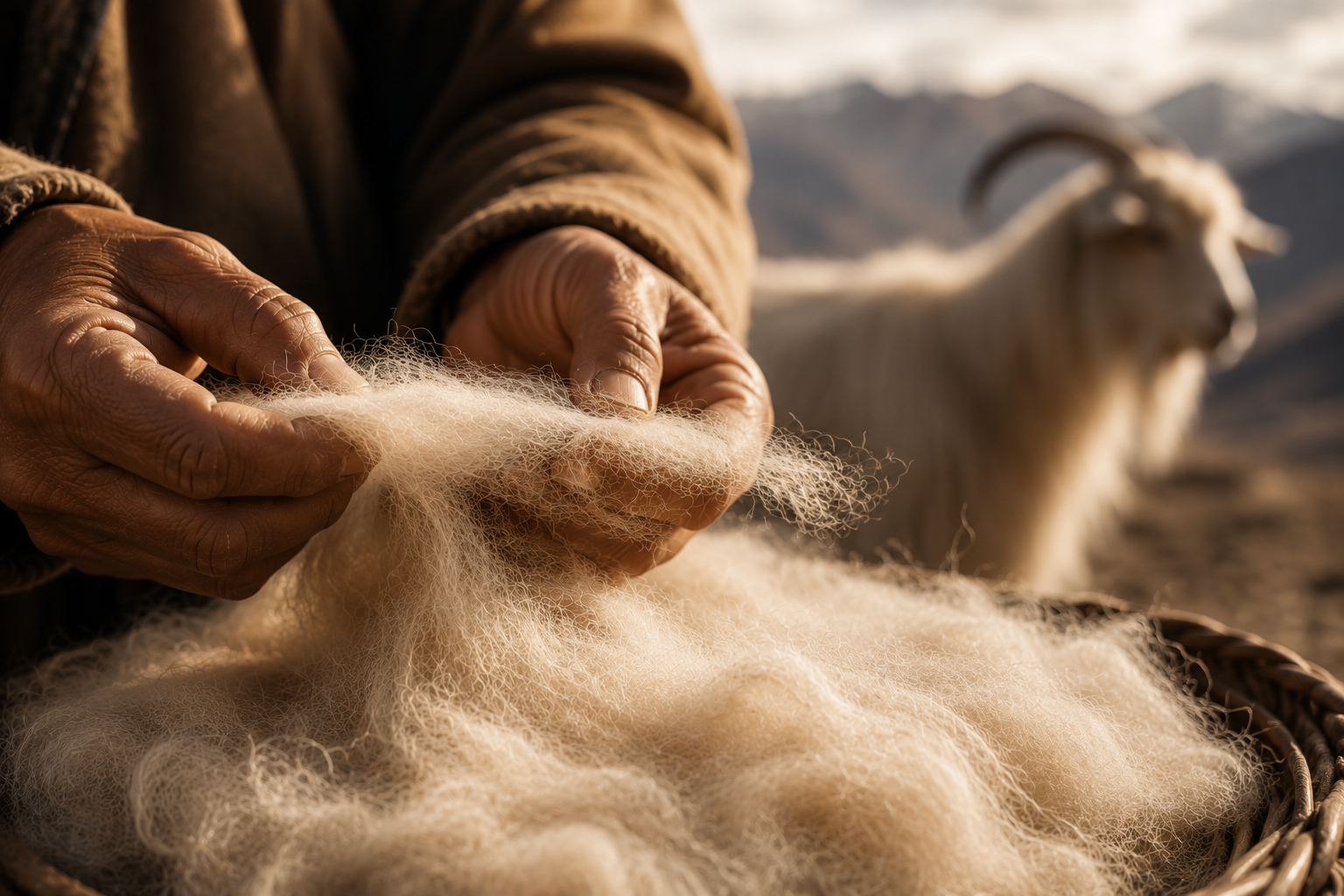
In the high-altitude regions of Ladakh, extreme winters lead the goats to develop an exceptionally fine insulating undercoat.
What nature produces in scarcity, generations of artisans refine into one of the world’s most prized natural fibres.
Altitude Creates Exceptional Fibres
High Altitude
3,500–5,000 metres above sea level
The extreme elevations of Ladakh create the harsh conditions needed for the development of exceptionally fine and insulating cashmere fibres.
Extreme Winters
Temperatures below -30°C
To survive Himalayan winters, goats develop an ultra-fine undercoat that provides remarkable warmth while remaining incredibly lightweight.
RARE FIBRE YIELD
Only 80–150 grams per goat annually
Each animal produces only a small quantity of usable fibre each year, contributing to the rarity and value of genuine cashmere.
Hand Collected
Gathered once each spring
The soft undercoat is carefully combed by hand during the natural moulting season, preserving fibre quality and respecting traditional practices.
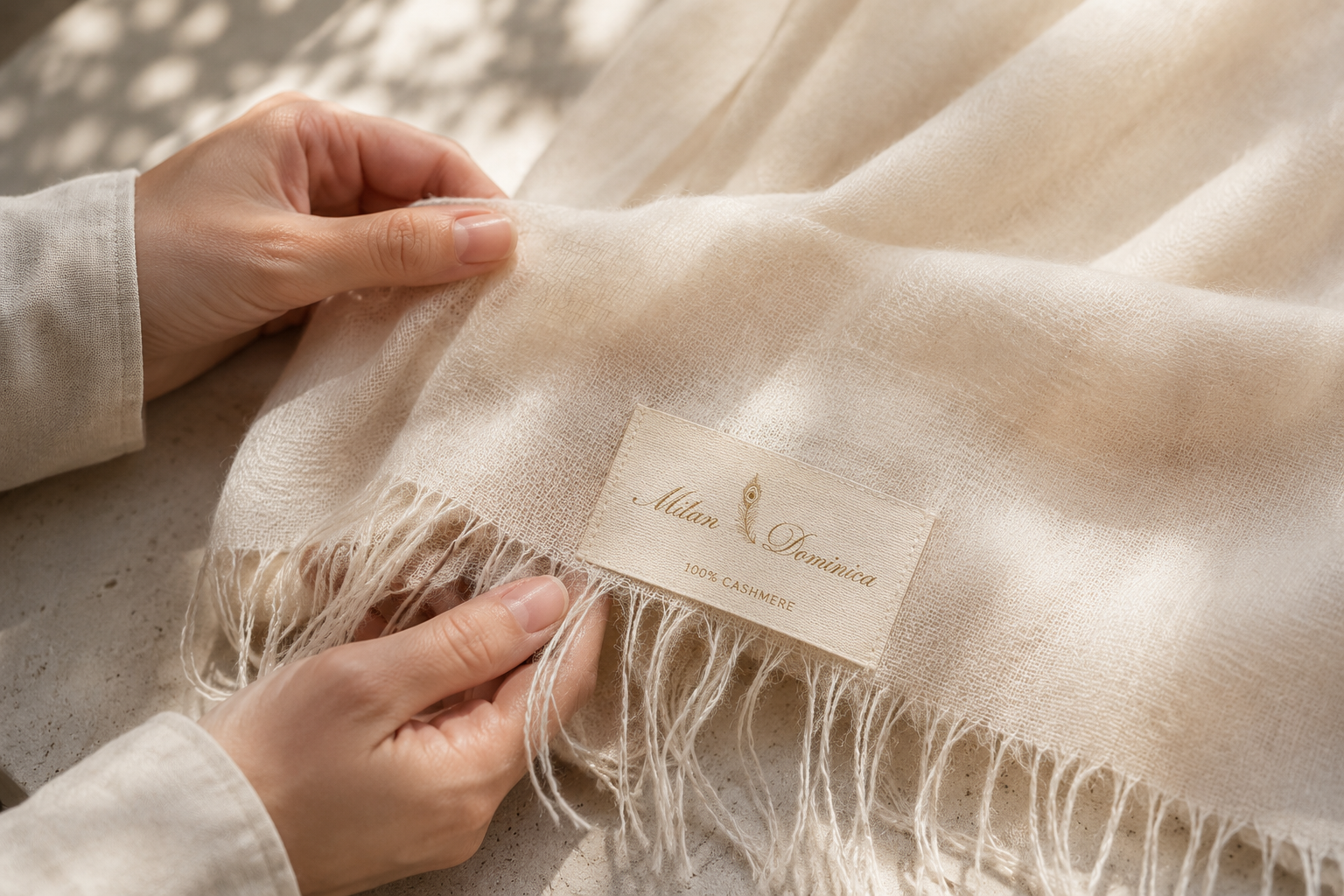
Milan x Dominica
WHY CASHMERE IS SO RARE
Cashmere is among the rarest natural fibres.
Each goat yields only 80–150 grams of usable fibre a year — gathered during the brief spring shedding season.
This limited annual yield, combined with the careful selection required after collection, is what makes fine cashmere inherently scarce.
THE FINEST FIBRE IS NOT MADE. IT IS GROWN.
Fibre diameter is one of the key indicators of softness. The finer the fibre, the softer and more delicate it feels against the skin.
CASHMERE
14–19 microns
Fine, lightweight fibres prized for their softness and natural insulation.
MERINO WOOL
18–24 microns
Fine and comfortable, with a generally coarser fibre structure than cashmere.
TRADITIONAL WOOL
25–40+ microns
More robust fibres prioritising durability over softness.
SILK
10–15 microns
Exceptionally smooth and lustrous, with very different thermal properties from cashmere.
THE ART OF CASHMERE CRAFTSMANSHIP
FINE FIBRES DEMAND A DIFFERENT KIND OF CRAFT.
Sorting, spinning, weaving and finishing each demand a different understanding of the fibre.
The finest cashmere rewards restraint: careful handling, precise workmanship and time.
It is through these decisions that a delicate natural fibre acquires its final character.


#1
Ladakh Heritage Selection
14–15.5 microns
Our finest selection, chosen for remarkable softness, warmth, and lightness.
#2
Grade A Cashmere
15.5–16.5 microns
Fine fibres combining softness, warmth, and lasting performance.
#3
Grade B Cashmere
16.5–18.5 microns
Fine everyday cashmere valued for its warmth, softness, and versatility.
#4
Standard Cashmere
18.5+ microns
More widely available fibres commonly used in commercial cashmere products.
FROM FIBRE TO FINISHED PIECE
The journey behind every Milan x Dominica creation.
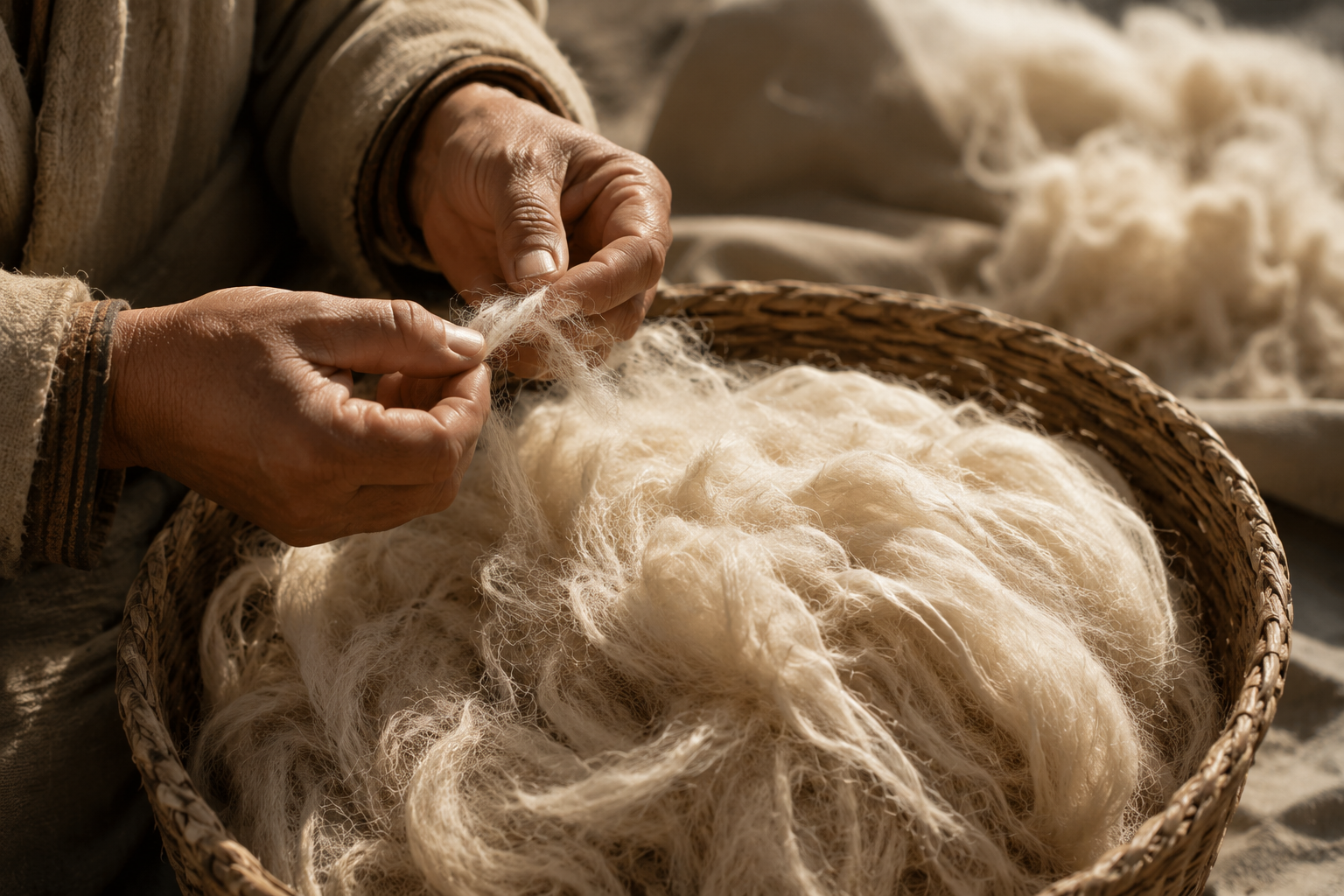
HAND HARVESTED
The fine undercoat is carefully collected during the natural spring shedding season.
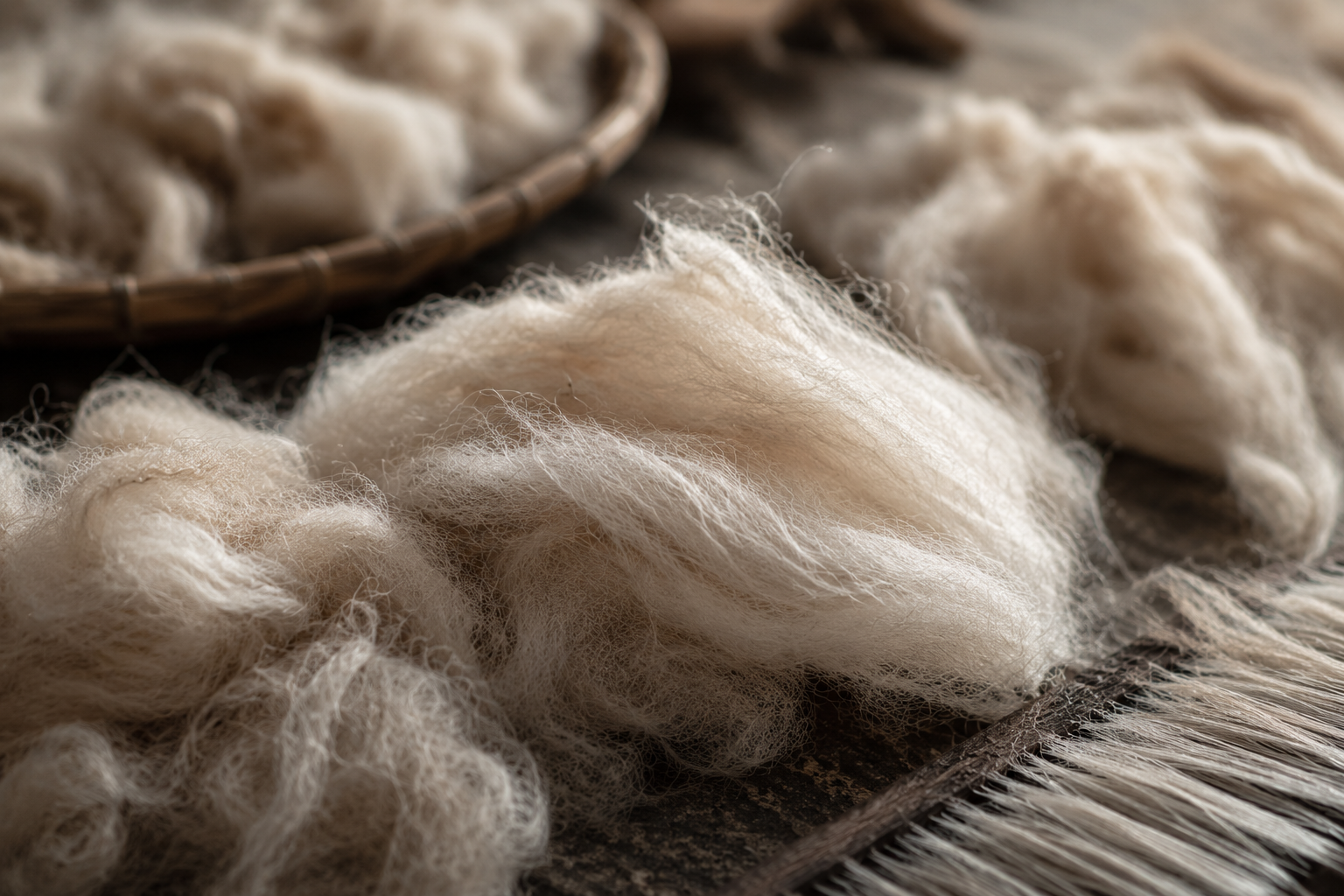
Fibre Selection
The fibres are sorted for fineness, consistency, and character.
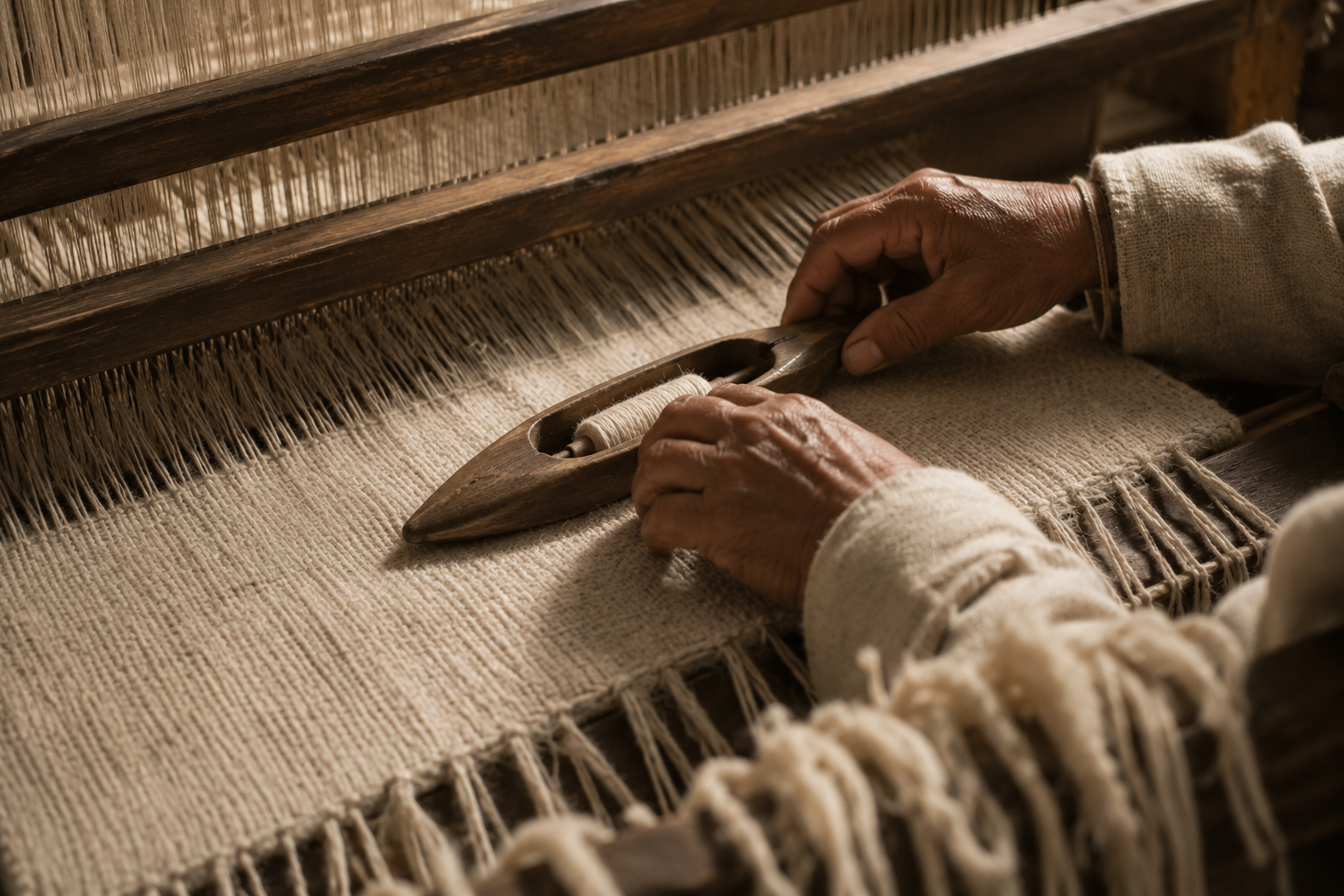
Weaving & Finishing
Skilled hands shape the fibre through weaving, finishing, and careful detailing.
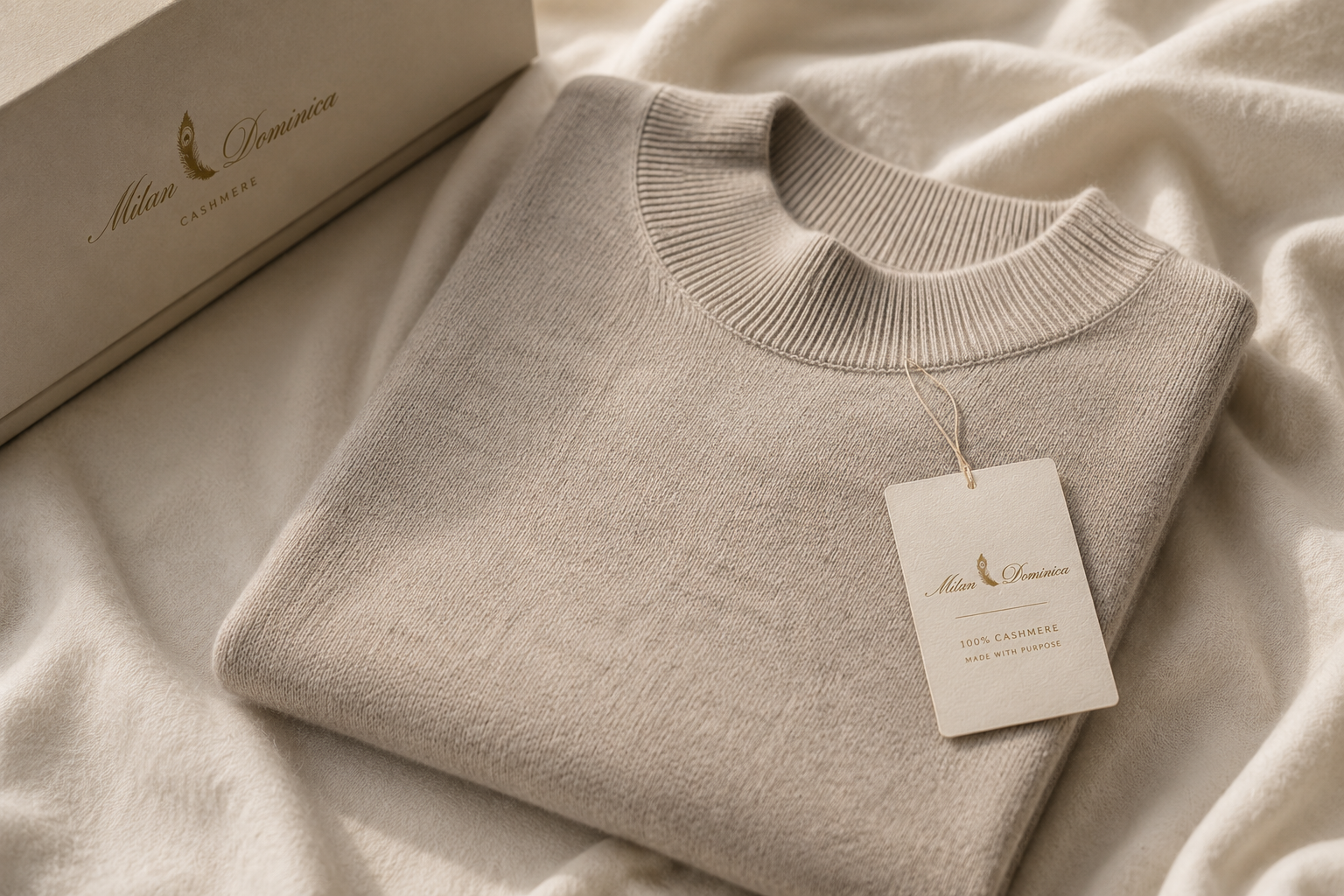
Ready To Be Worn
Finished with restraint, allowing the character of the cashmere to speak for itself.
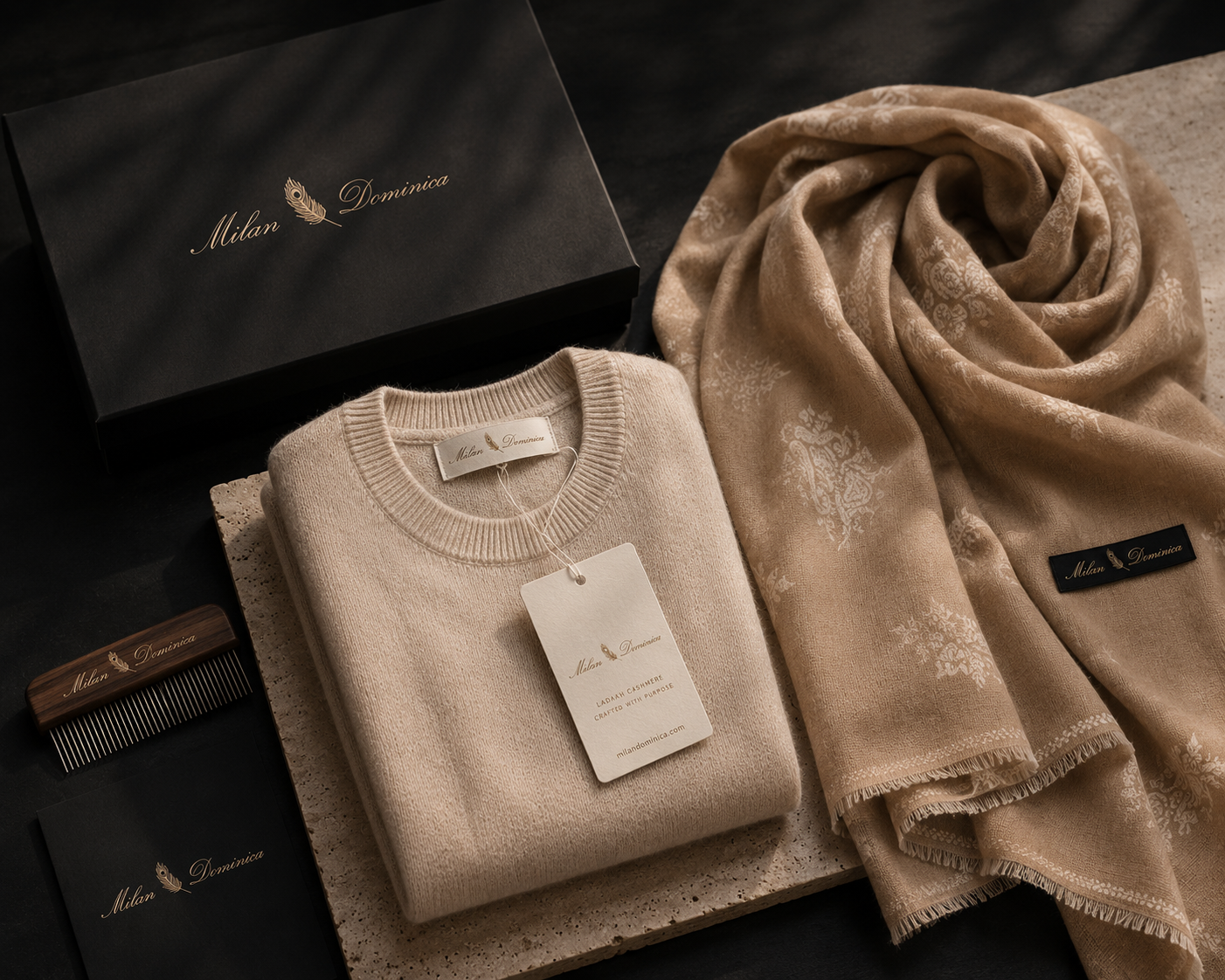
MILAN X DOMINICA
CARING FOR CASHMERE
Exceptional cashmere asks for little, yet repays careful attention. Proper care preserves its softness, shape, and character for years to come.
AIR BETWEEN WEARS
Allow your piece to rest naturally between wears.
FOLD, NEVER HANG
Store folded to preserve its shape and structure.
WASH WITH CARE
Use cool water and a cashmere-safe detergent.
REMOVE PILLS GENTLY
Remove natural pilling gently with a cashmere comb.
STORE THOUGHTFULLY
Keep folded and protected from sunlight.
Milan x Dominica
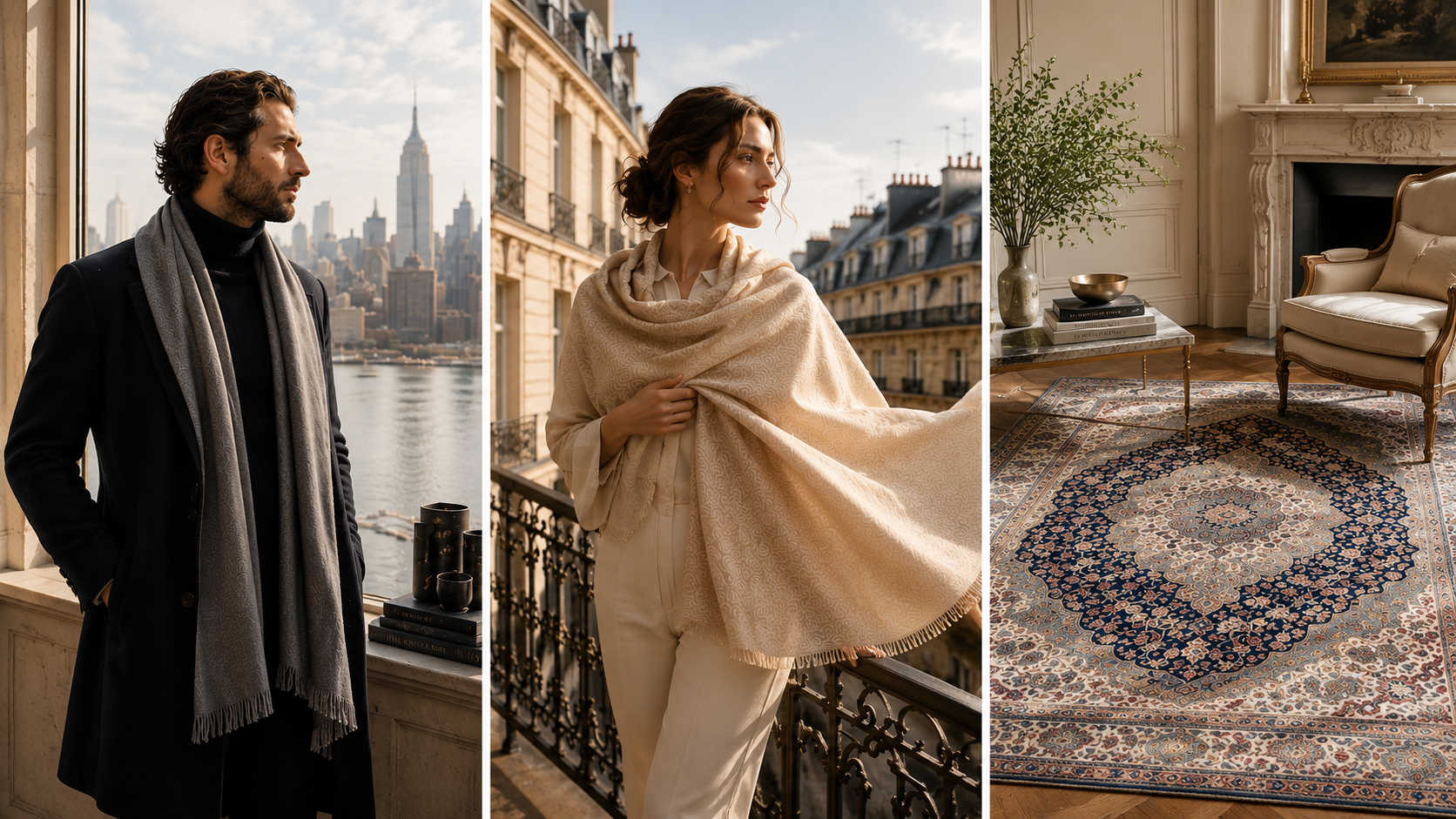
ONE MATERIAL. DIFFERENT EXPRESSIONS.
Pashmina. Knitwear. Heritage. Interior.
From something worn close to the skin to an object that becomes part of a home, cashmere takes different forms throughout Milan x Dominica.
Each is shaped by the same belief in exceptional natural materials, considered craftsmanship and objects made to endure.